Home / Blog / Website Chatbot vs Live Chat: Which Works Better for Small Businesses in Dubai?
Compare chatbot vs live chat for small businesses in Dubai. Discover the benefits, costs, and key differences to choose the right customer support solution for your business.
7 Nov, 2026
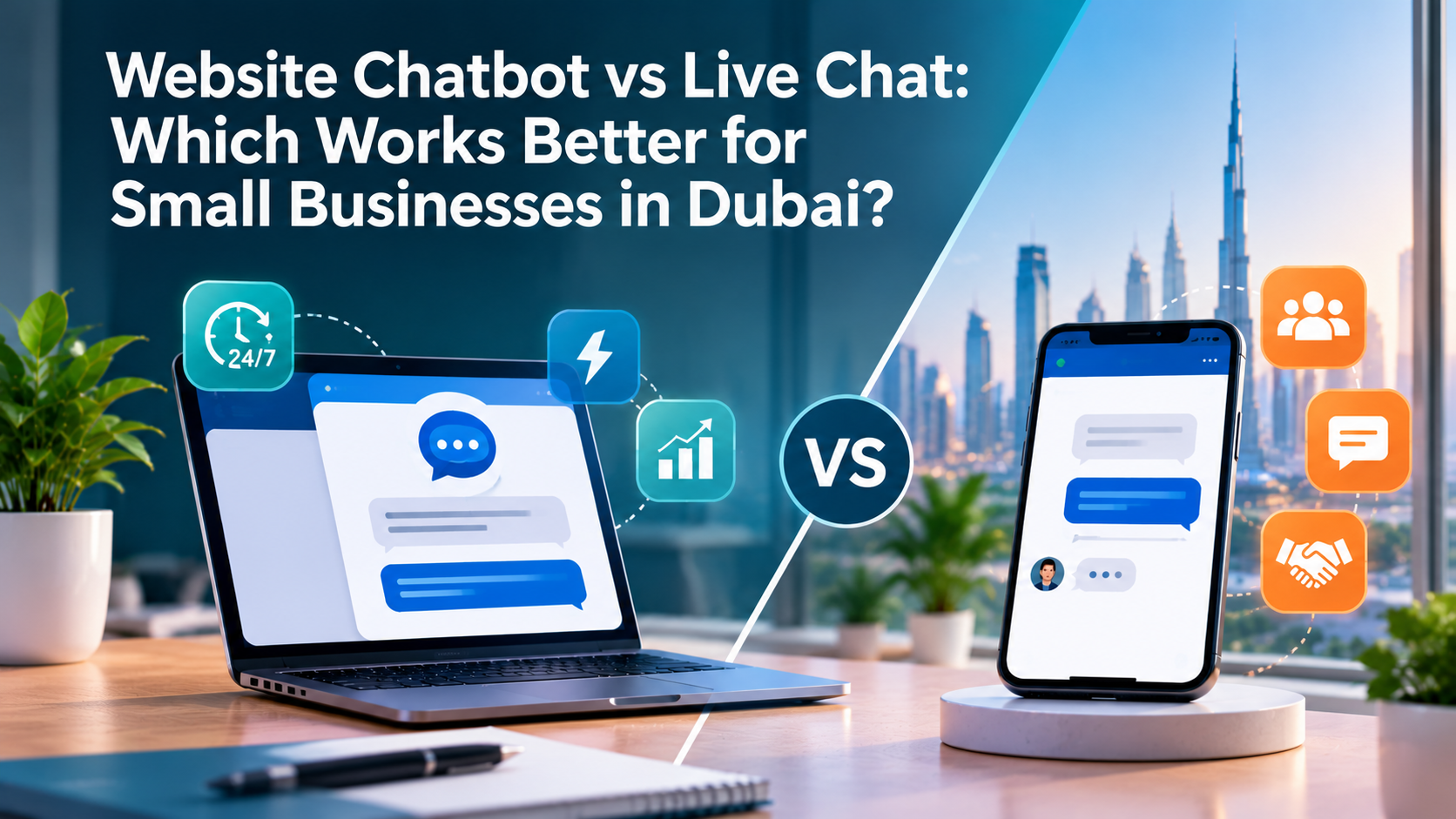
For most small businesses in Dubai, the answer to chatbot vs live chat depends on how many enquiries you receive and who is available to answer them. Live chat puts a real person in the conversation, but someone has to be online. A website chatbot replies instantly at any hour, but it can only handle what it has been set up to understand. Many small teams end up using both, with a bot covering routine questions and a person stepping in when needed. If you decide a bot is worth building, professional AI chatbot development can be scoped around the questions your customers actually ask.
Small teams rarely have a dedicated support desk. The person who handles sales often answers website enquiries, manages suppliers, invoices, and everything else. Meanwhile, customers browse in the evening, switch between Arabic and English, and often move on quickly if nobody replies. Your choice of chat tool decides whether those visitors get an answer, wait until the next morning, or leave for a competitor.
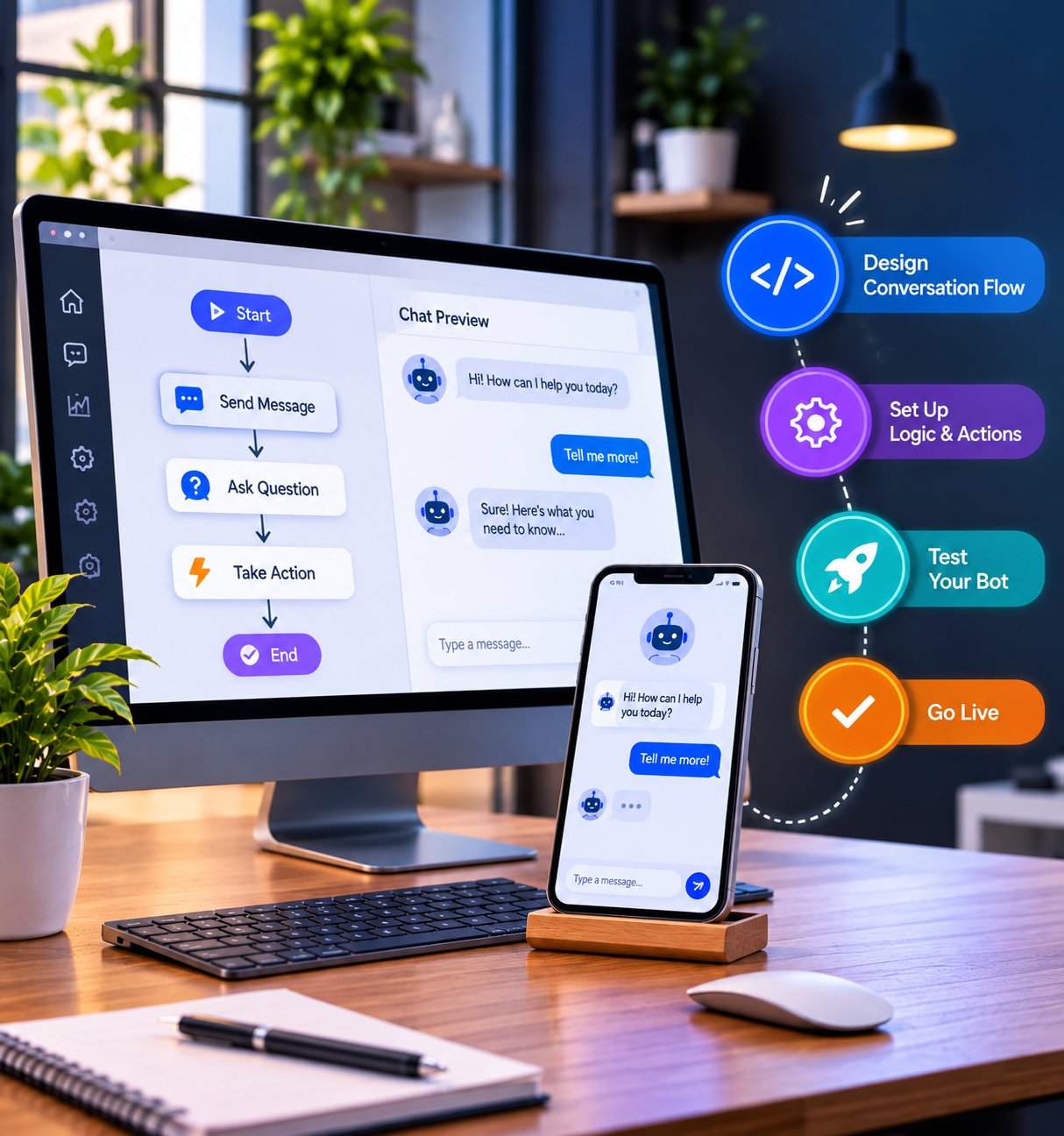
Live chat is a messaging widget on your website that connects visitors to your staff in real time. Its main strength is human judgment. A person can handle unusual requests, read a hesitant buyer's tone, clarify a complicated quote, and deal with a complaint sensitively.
The limits are practical. Someone must be online during the hours visitors are active, and replies slow down when several chats arrive at once. Cost grows with staff time, and outside working hours the widget usually falls back to a "leave a message" form, which loses much of the speed that made live chat attractive.
A website chatbot answers visitors automatically. A rules-based bot follows scripted menus and buttons. An AI chatbot interprets free-text questions and responds using content you provide, such as FAQs, service details, and booking rules.
The strengths are availability, consistency, and scale. A bot replies at 11 pm, handles many visitors at the same time, gives the same answer each time, and can collect a visitor's name, number, and for your sales team. The limits are equally clear. A bot is only as good as its setup and content; it can misread unusual questions, and it frustrates people when there is no way to reach a human. It also needs upkeep whenever your prices, services or policies change.
Live chat tends to suit businesses with low enquiry volume and consultative sales, where the conversation itself wins the customer and someone can reliably be online. Think of a firm selling bespoke services where every enquiry is different.
A chatbot suits businesses that answer the same questions repeatedly: opening hours, location, whether a service is available, how booking works. It also helps if a meaningful share of enquiries arrives outside office hours and your team is already stretched.
Often the best setup is neither extreme. Imagine a small salon or clinic. The bot answers questions about services, hours and available slots, and collects details for anything it cannot resolve. When a visitor asks something specific or sounds frustrated, the conversation passes to a staff member. The quality of that escalation matters more than most owners expect, and our guide to chatbot human handoff explains how to set it up so customers never feel trapped in a loop.
Work through these steps before choosing a tool:
If you are still unsure whether a bot makes sense, read what is an AI chatbot and when a UAE business actually needs one.
Neither wins outright. Live chat suits low volume and complex, consultative sales. A chatbot suits repetitive questions and after-hours enquiries. A hybrid, where the bot handles routine queries and passes the rest to a person, often fits small teams best.
Yes. Many businesses start with live chat, then add a bot once they see which questions repeat. Your chat history is useful here, because real customer questions are the best material for training and testing a bot.
Live chat costs mainly staff time and coverage hours. A chatbot costs setup effort plus ongoing content updates and conversation reviews. Exact figures depend on scope, so the most reliable route is a quote based on your requirements.
Browse
Resources