Home / Blog / What Is eCommerce Development? A Complete Guide for Online Businesses
eCommerce development is the process of building and managing online stores that enable businesses to sell products or services digitally. This guide explains what eCommerce development includes, how it works, and why it’s essential for online businesses planning long-term growth.
20 Dec, 2025
What Is eCommerce Development?
eCommerce development is the process of creating, configuring, and maintaining an online store that allows businesses to sell products or services over the internet. It goes beyond designing a website and focuses on building the systems that handle products, payments, users, and transactions securely.
A well-developed eCommerce website ensures that customers can browse products easily, place orders without friction, and trust the platform with their data.
Why eCommerce Development Is Important for Online Businesses?
Online shoppers expect speed, security, and simplicity. If an eCommerce website is slow, confusing, or unreliable, users abandon it quickly.
Strong eCommerce development helps businesses:
For online businesses, development quality directly affects trust and conversions.
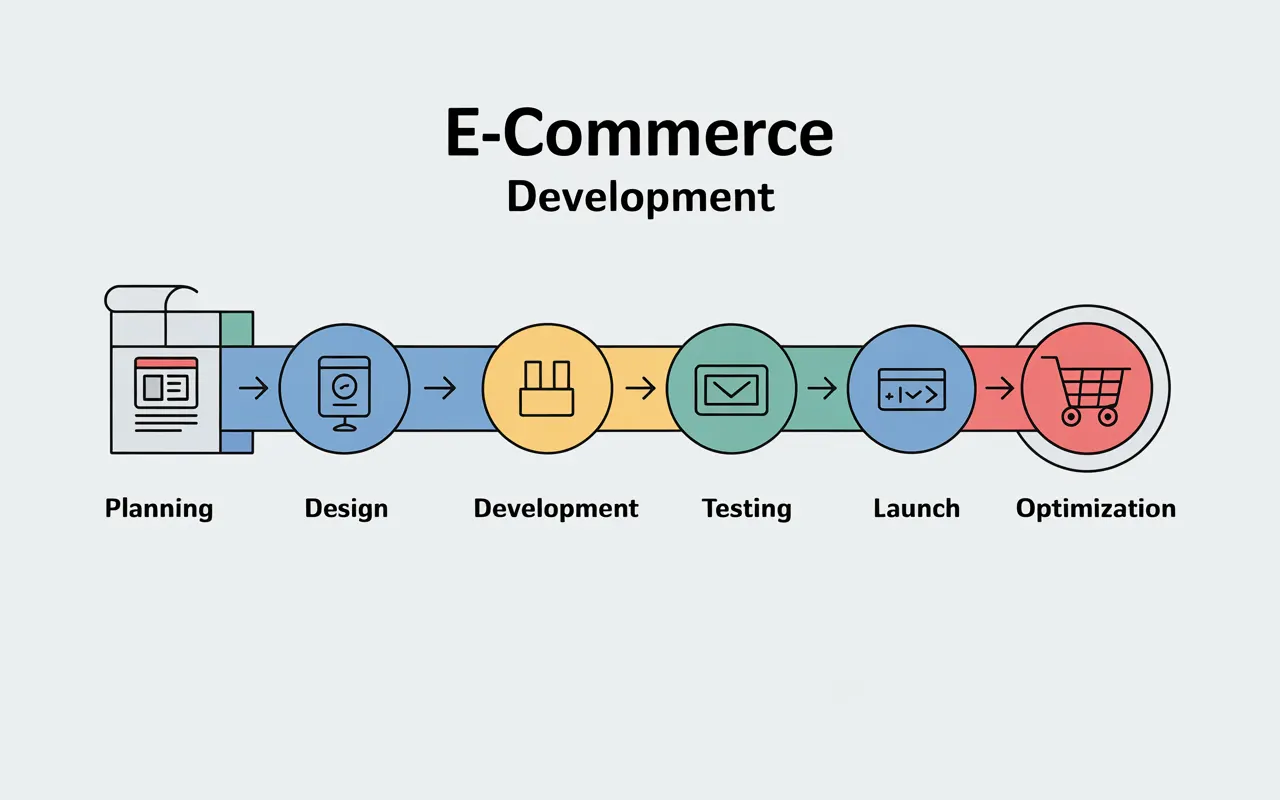
Frontend development focuses on what users see and interact with:
A well-built frontend improves usability and engagement.
Backend development manages the store’s internal operations:
Reliable backend systems ensure stability as the business grows.
Payment integration is a critical part of eCommerce development. It includes:
Poor payment experiences are a common cause of cart abandonment.
eCommerce websites handle sensitive customer information. Development includes:
Security plays a key role in customer confidence.
Uses platforms like Shopify or WooCommerce.
Best suited for:
Standard feature requirements
Built specifically for unique business needs.
Best suited for:
Choosing the right platform depends on goals, budget, and technical needs.
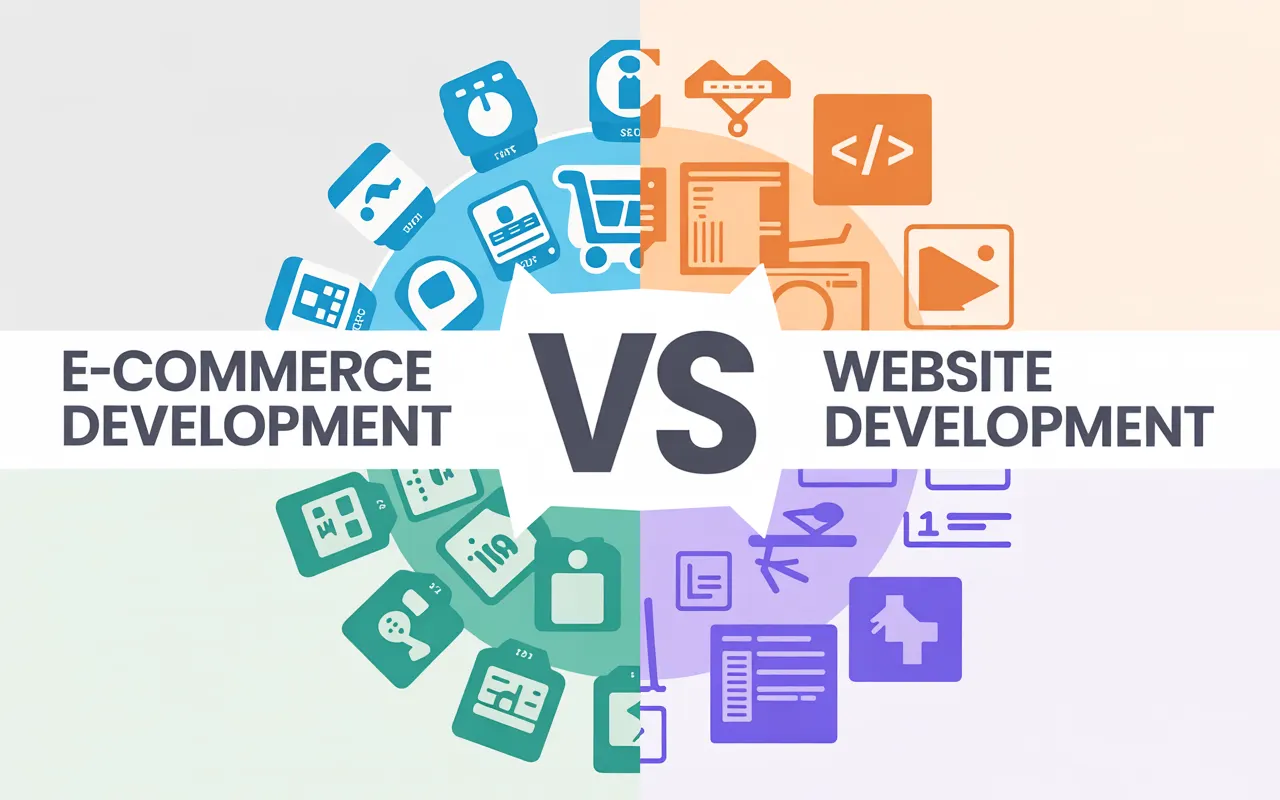
A standard website shares information.
An eCommerce website processes transactions, manages data, and supports sales at scale.
That’s why eCommerce development requires deeper technical planning than regular website development.
Well-developed eCommerce websites:
Poor development creates technical limitations that slow growth.
Businesses typically need professional eCommerce development when:
eCommerce development is the backbone of any successful online store. It combines technology, usability, and security to support online sales effectively.
For online businesses, investing in proper eCommerce development ensures long-term stability, better user experiences, and sustainable growth.
Q1 What does eCommerce development include?
A1 - eCommerce development includes building the frontend and backend of an online store, integrating payments, managing products, and ensuring security and performance for online transactions.
Q2 Is eCommerce development necessary for small businesses?
A2 - Yes. Even small businesses benefit from proper eCommerce development through better user experience, security, and scalability as their online presence grows.
Q3 How long does eCommerce development take?
A3 - Timelines vary based on complexity. Simple platform-based stores may take weeks, while custom eCommerce development projects can take several months.
Q4 What’s the difference between eCommerce design and development?
A4 - Design focuses on visuals and branding, while development handles functionality, payments, data management, and performance.
Q5 Can existing websites be converted into eCommerce stores?
A5 - Yes. Many informational websites can be upgraded into eCommerce stores through proper development and platform integration.
Q6 Which eCommerce platform is best for beginners?
A6 - Platforms like Shopify and WooCommerce are commonly used by beginners due to ease of use and strong ecosystem support.
Browse
Resources