Home / Blog / Menu Design & Printing for Restaurants: What Every Business Should Know
Discover how professional menu design and printing services in Dubai and across the UAE can improve customer experience, enhance restaurant branding, and influence ordering decisions. Learn about effective menu layouts, typography, print materials, finishes, and QR code integration to create attractive, durable, and easy-to-read restaurant menus.
12 Nov, 2026
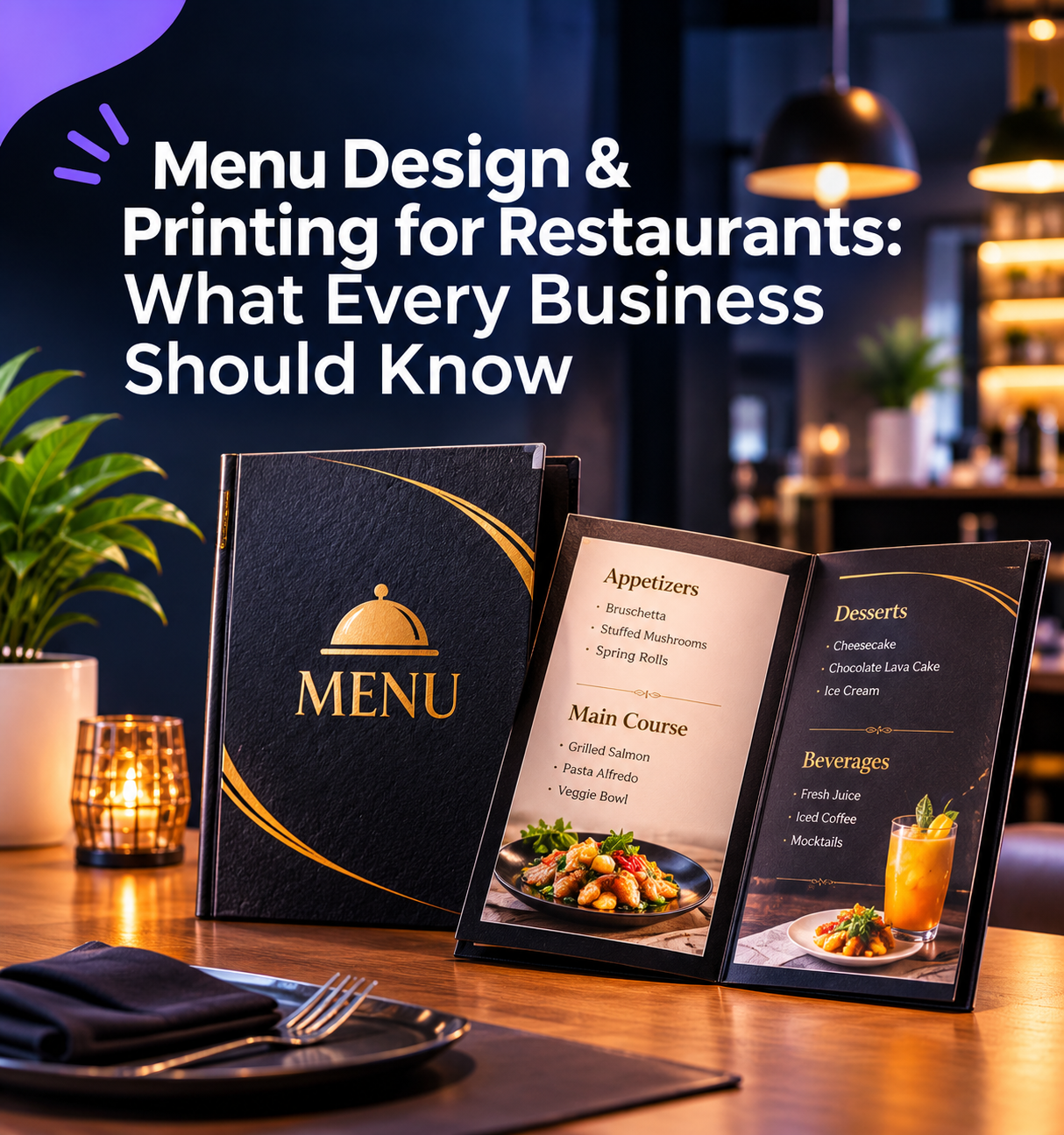
A restaurant menu is more than a list of dishes and prices; it influences how customers explore their options, make ordering decisions, and perceive the overall dining experience. For restaurants in Dubai and across the UAE, a professionally designed and high-quality printed menu can strengthen brand presentation while making information easier to read and navigate. A reliable menu design and printing service helps create menus that combine attractive visuals, clear layouts, durable materials, and practical functionality for everyday restaurant use.
Guests typically scan a menu for a few seconds before deciding. Poor layout, cramped text, or inconsistent formatting make that decision harder, which slows down table turnover and often pushes customers toward the cheapest, easiest-to-read option rather than higher-margin dishes. Good menu design uses visual hierarchy, clear sections, consistent spacing, and deliberate placement of higher-margin items to guide attention naturally.
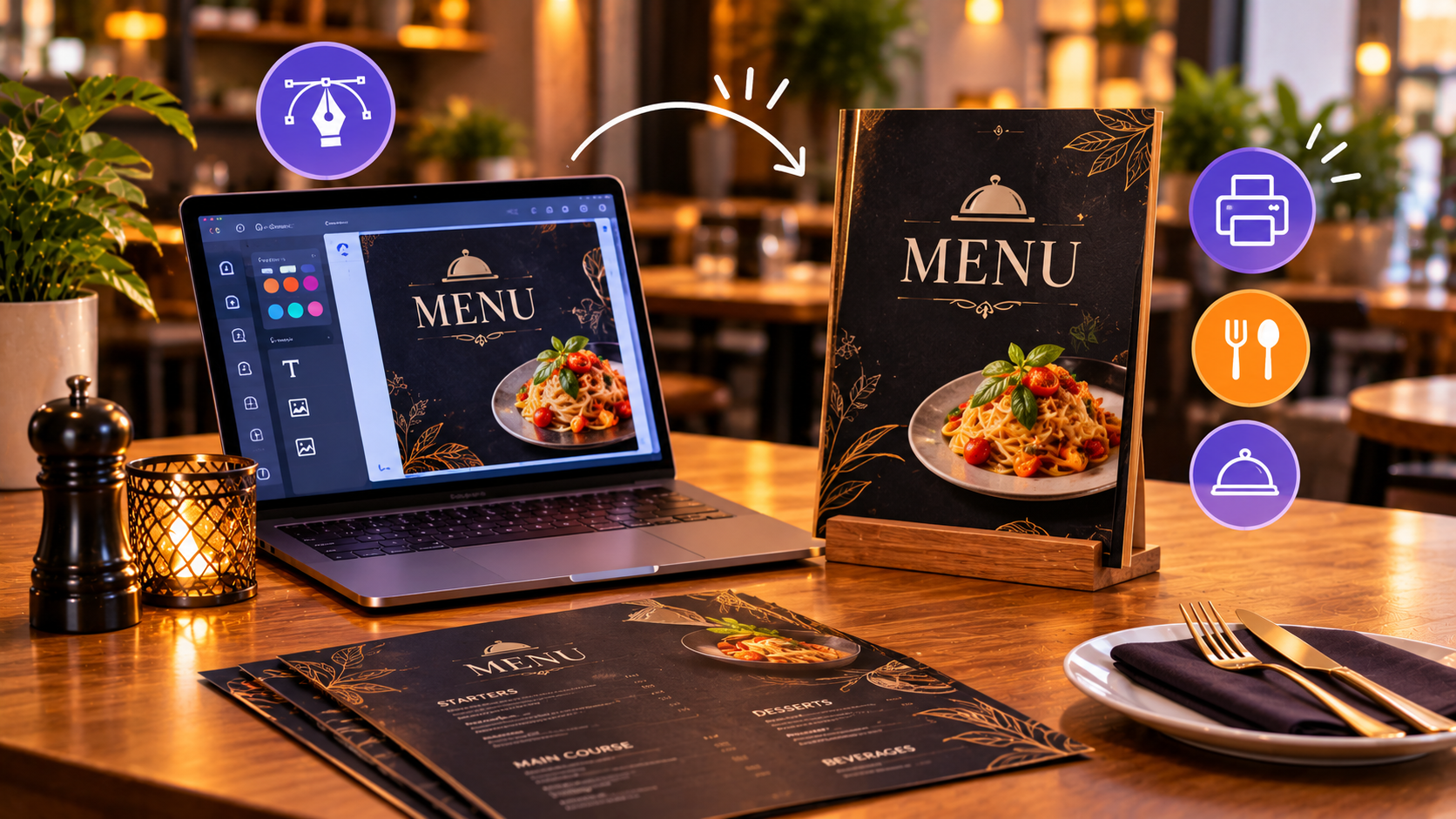
Design is only half the equation; print execution affects durability and guest perception just as much.
Many UAE restaurants now run print menus alongside QR code digital versions. This isn't an either/or decision; print menus still perform better for browsing and ambience, while digital menus offer faster updates and multilingual options for Dubai's diverse customer base. The two should share consistent branding and structure rather than being designed as separate, disconnected systems.
If your menu hasn't been reviewed in over a year, or if you're opening a new location, a structured design and print review is worth the time. The goal isn't just a nicer-looking menu; it's a layout and print format that supports faster ordering, protects margins, and reflects the restaurant's brand consistently across every touchpoint.
Q1: What does a menu design and printing service typically include?
It usually covers layout design, typography and branding alignment, category structuring, print-ready file preparation, and material/finish selection (paper stock, lamination, and format). Some providers also handle QR-linked digital menu versions alongside the printed copy.
Q2: How much does menu design and printing typically cost?
Cost depends on menu length, number of language versions, print quantity, paper/finish choice, and whether custom photography is included.
Q3: How do I get started with a menu redesign?
Start by auditing your current menu's structure, pricing accuracy, and print condition, then define your goals (faster ordering, higher-margin item visibility, updated branding). From there, a designer can propose a layout and print format suited to your restaurant type and volume.
Browse
Resources