Home / Blog / The WooCommerce Website Development Dubai Checklist Every Dubai Business Needs
Explore the essential checklist for launching a successful WooCommerce store in Dubai, covering store setup, UAE VAT compliance, payment gateways, security, hosting, and SEO. Learn how proper planning and ongoing maintenance can help businesses build a secure, high-performing, and customer-friendly e-commerce website.
24 Nov, 2026
Launching a WooCommerce store in the UAE involves more than installing a plugin and adding products. Between local payment expectations, VAT-compliant invoicing, hosting performance, and the technical groundwork an e-commerce site needs to rank and convert, it's easy for a business to miss a step that causes problems after launch. This checklist walks through what a Dubai business should confirm at each stage of a WooCommerce website development project, from initial planning through post-launch maintenance.
Dubai's e-commerce market is competitive, and customers expect fast load times, mobile-friendly checkout, and locally relevant payment options. A WooCommerce build that skips discovery work or security basics tends to surface problems only after the store goes live: slow pages, checkout errors, or search visibility that never quite gets off the ground. Working through a checklist before development starts, and again before launch, reduces the number of surprises and makes the project easier to budget and schedule.
Before any development work begins, a business should have clarity on the following:
Getting this right early avoids rework later. A store scoped for 50 products behaves very differently, technically, than one scoped for 5,000 SKUs with variable attributes.
Once planning is complete, the technical setup phase covers the core of the store itself:
It helps to configure this in a staging environment first so the live site isn't affected while settings are being tested.
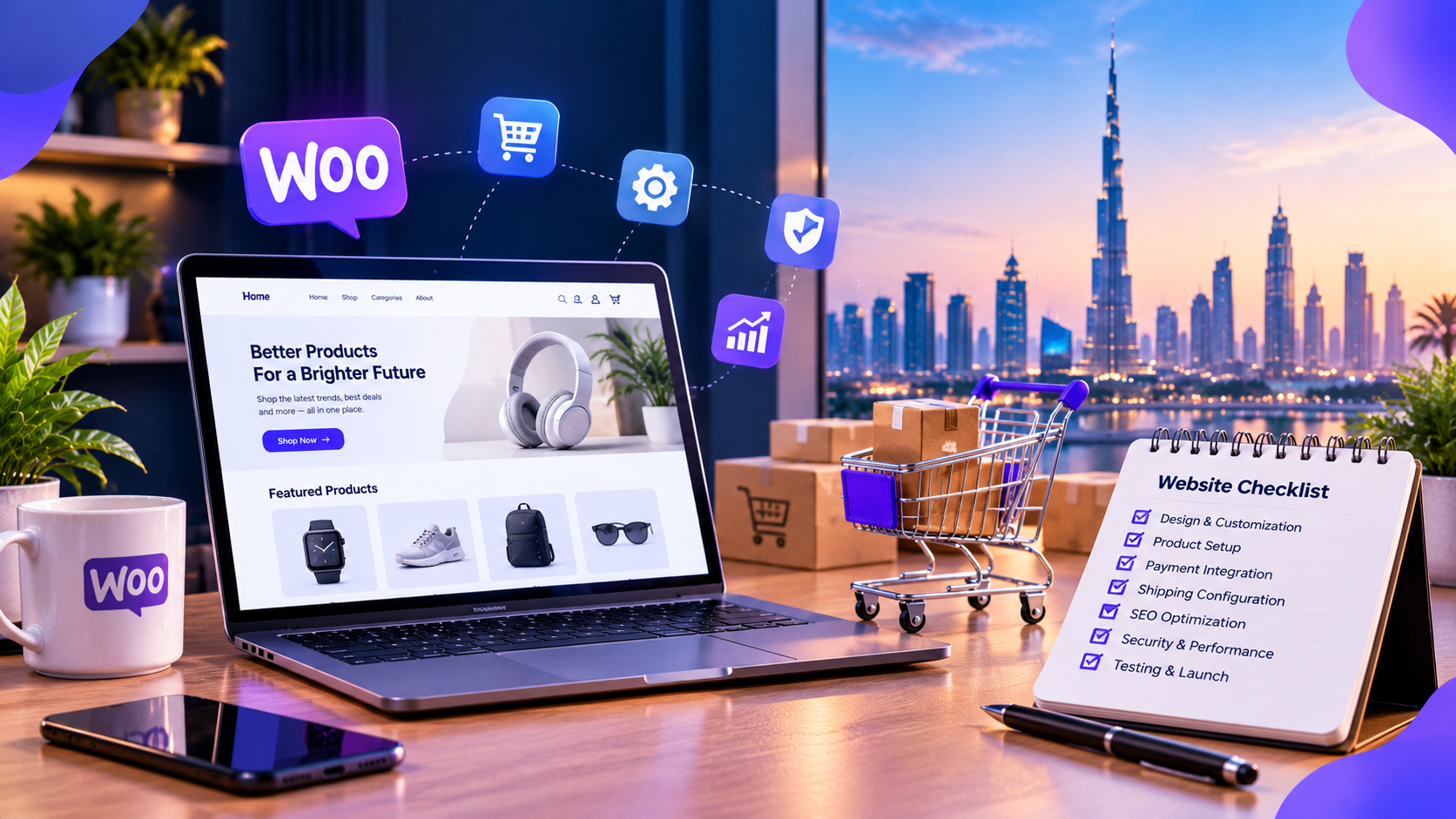
Payment setup is one of the areas where UAE-specific requirements matter most:
A checkout that adds friction through too many steps, unclear pricing, or unfamiliar payment options is one of the more common reasons UAE e-commerce stores lose sales at the final step.
Security and speed both affect trust and conversion, and both should be confirmed before launch:
A store that's slow or insecure loses customer trust quickly, and search engines factor page experience into how e-commerce pages are ranked.
A WooCommerce store built without SEO in mind usually needs significant rework later. Before launch, confirm:
Businesses budgeting for this stage often want to understand pricing ranges in advance; a dedicated WooCommerce website development Dubai cost guide breaks down the cost factors in more detail.
Launch isn't the finish line. Ongoing maintenance keeps the store secure, fast, and competitive:
Many businesses treat this checklist as a one-time launch document, but revisiting it every few months, particularly the security and performance sections, helps catch issues before they affect sales. It's also worth being aware of the mistakes that commonly show up during and after WooCommerce projects in Dubai, since several of them trace back to steps on this checklist being skipped.
Q1: What are the must-have items on this checklist?
Answer: The non-negotiable items are SSL and hosting security, UAE-compliant VAT and invoicing setup, a tested checkout flow, and mobile page speed. These directly affect customer trust, legal compliance, and conversion, so they shouldn't be deferred to a post-launch fix.
Q2: How often should this checklist be reviewed?
Answer: The full checklist is most relevant before launch and before any major redesign. A shorter version covering security updates, backups, and page speed is worth reviewing monthly, since these areas tend to degrade quietly if left unchecked between larger reviews.
Q3: Does every WooCommerce store need all of these steps, even a small one?
Answer: Most of the checklist applies regardless of store size, though the depth varies. A small catalog still needs VAT-compliant checkout, SSL, and basic SEO setup; it just needs less time spent on catalog structure and integrations than a large multi-category store would.
Browse
Resources